
Repairing Chipped Or Broken Teeth
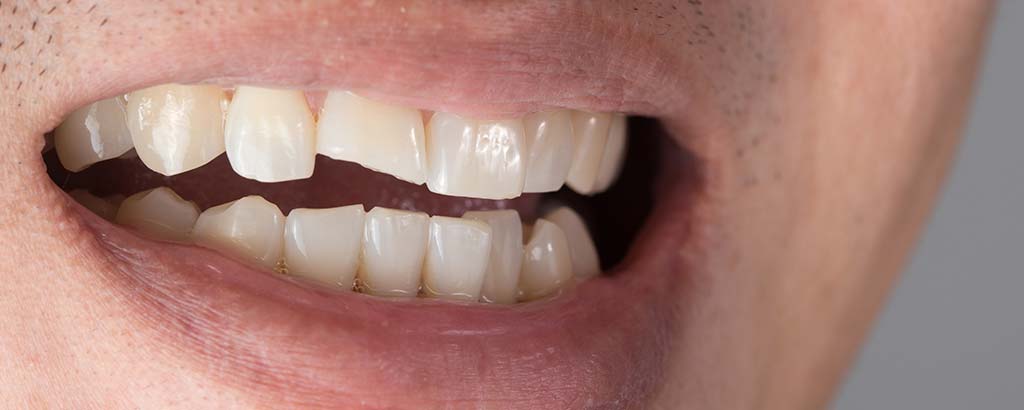
How Do You Chip or Crack Your Teeth?
Enamel, which protects your teeth and is the toughest component in your body, has limitations. Your teeth may chip or crack if you chew on hard sweets or ice, bite down hard, take a blow to the face, or grind your teeth while sleeping. Even poor hygiene and cavities may weaken your teeth, making them more prone to chipping or cracking. When you chip a tooth, you may not feel any pain unless the chip is large enough to reveal the inner layer of the tooth. A broken tooth may simply affect the enamel and not cause pain unless you bite down hard or your mouth’s temperature changes. A broken tooth is often undetectable to the naked eye. This is why it’s critical to make regular checkups with our doctors, as they’ll be able to identify issues before they become uncomfortable.
What Types of Broken or Chipped Teeth Would Our Doctors Recommend Fixing
Craze lines are tiny fissures in the teeth. These fractures affect just the outer layer of your enamel. They are quite frequent among adults. They are quite superficial and do not cause discomfort. Although they are not visually appealing, they are not harmful. Our doctors do not advocate mending these sorts of cracks.
A fractured cusp is a break at the tip of a tooth on the chewing surface. A weaker cusp may break off on its own, or our doctors may need to remove it. Pain is generally eased after it is eliminated. Fractured cusps seldom injure your tooth’s pulp, thus root canal treatment is typically unnecessary. Our doctors may propose a crown to restore the tooth to normal function.
Cracked teeth can extend all the way from the chewing surface to the root. Depending on the location of the shattered tooth, pulp injury may occur. In most circumstances, our doctors would prescribe root canal therapy to repair a broken tooth.
A split tooth occurs when a tooth cracks and gradually breaks into two different sections. Depending on the severity of the split, our doctors may be unable to keep the tooth intact. Depending on the location and severity of the break, he will decide if a crown or another restorative operation can save a portion of the tooth.
Vertical root fractures are cracks that start at the root of a tooth. Because the fracture line may not be visible, our doctors must pay close attention to your symptoms in order to determine whether you have one. Vertical root fractures are among the most challenging fractures to diagnose. Endodontic treatment is frequently used to treat them. It is possible to salvage portion of the tooth, but in most situations it must be removed.
How To Prevent Cracked or Chipped Teeth
It’s difficult to completely prevent chipped or cracked teeth because almost everyone ends up with them. Here are a few ideas that our doctors suggest to prevent unnecessary damage.
- Don’t chew on ice, popcorn kernals, pens, hard candy or other hard objects.
- Don’t clinch or grind your teeth.
- If you clench or grind your teeth while sleeping, speak with our team about getting a retainer or mouthguard.
- When playing contact sports where a mouthguard.
If you would like a closer examination of your teeth visit us or call to schedule a consultation. Call us at (520) 838-0600 or send us an email.